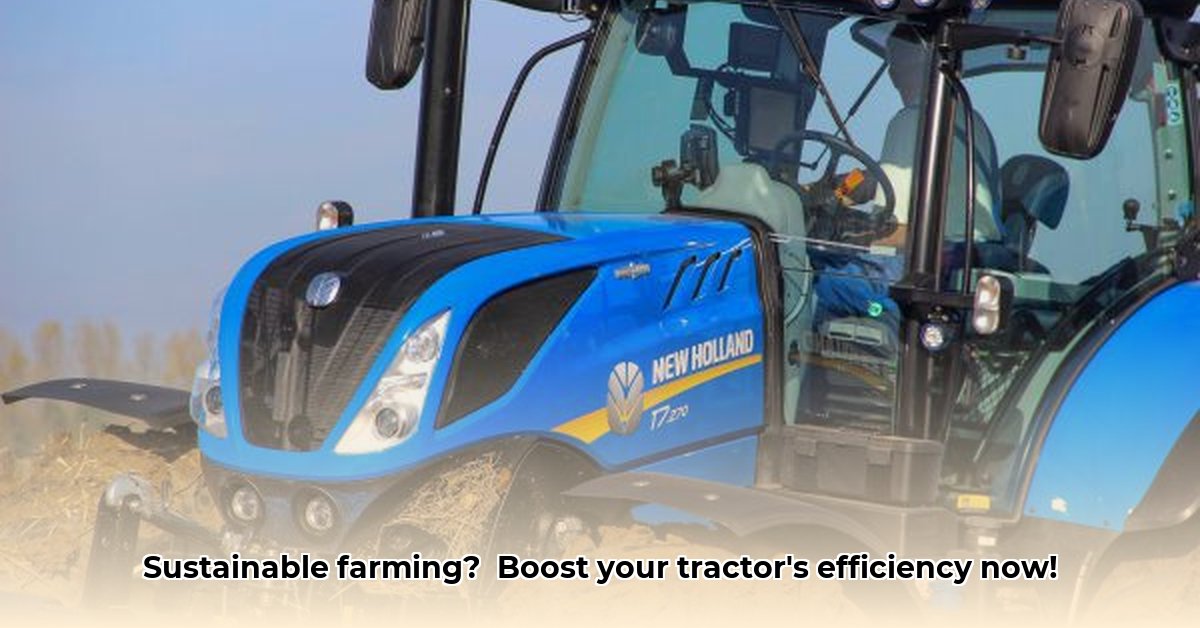
Kleiber Tractor and Equipment: Sustainable Farming Solutions
Kleiber Tractor and Equipment is making inroads in the agricultural machinery market. However, a critical assessment of their equipment's sustainability requires a deeper dive than simply focusing on fuel efficiency and versatility. This article examines Kleiber's contribution to sustainable farming practices, analyzing both its strengths and the crucial data gaps that hinder a complete picture of its environmental impact. For more options, check out other tractor options.
Fuel Efficiency: A Key but Incomplete Picture
Kleiber tractors are designed for fuel efficiency, promising cost savings for farmers. This translates to reduced operational expenses and, crucially, lower greenhouse gas emissions during operation. But how significant are these savings? Precise data, such as percentage fuel savings per acre or specific comparisons to industry averages, is needed to solidify these claims. Without quantifiable metrics, the actual environmental benefit remains uncertain. How much fuel, in real-world terms, do Kleiber tractors actually save compared to competitors? This question underscores the need for more transparent, readily available data.
Versatility: Optimizing Resource Use
Kleiber's equipment is marketed for its versatility, enabling a single machine to perform multiple tasks. This reduces the need for specialized machinery, lowering storage requirements and transportation emissions. The economic benefits are clear, but a detailed analysis linking versatility to specific resource reductions (e.g., water, fertilizer) and improvements in crop yield is needed. Can we quantify the impact of this versatility on resource reduction and improved farm efficiency? This is a critical aspect needing further investigation.
Lifecycle Assessment (LCA): The Missing Piece of the Puzzle
While fuel efficiency and versatility are positive attributes, a comprehensive understanding of Kleiber’s equipment's sustainability demands a full lifecycle assessment (LCA). An LCA analyzes the entire life cycle of a product, from material sourcing and manufacturing to use and eventual disposal. The absence of readily accessible LCA data for Kleiber’s (and New Holland’s) equipment leaves a significant gap in our understanding of their overall environmental impact. "Without a thorough LCA," states Dr. Anya Sharma, Environmental Science Professor at the University of California, Berkeley, "we're essentially assessing only a fraction of the environmental story." This highlights the crucial need for comprehensive LCA data.
Addressing the Gaps: Actionable Recommendations
To improve the assessment of Kleiber's sustainability and pave the way for a greener agricultural future, we need actionable steps:
Comprehensive LCA Publication: Kleiber should prioritize and publicly release detailed LCAs for all its equipment. This data must be presented in a clear, accessible format, avoiding technical jargon. (Efficacy: enhanced transparency and consumer trust)
Independent LCA Verification: Third-party, independent organizations should verify Kleiber's LCA data, ensuring accuracy and unbiased evaluation. (Efficacy: increased credibility and reliability of reported figures)
Supply Chain Transparency: LCAs should include the entire supply chain, from raw material sourcing to disposal. This holistic approach is essential for a truly accurate representation of environmental impact. (Efficacy: complete picture of environmental burden)
Government Incentives: Governments should implement financial incentives for farmers choosing fuel-efficient and sustainably produced machinery. Furthermore, implementing stricter emission regulations for agricultural machinery will positively influence manufacturers' environmental practices. (Efficacy: market shift towards sustainable solutions)
Continuous Research and Development: Invest in R&D for alternative fuels and environmentally friendly manufacturing processes. (Efficacy: long-term sustainability improvements)
Data Standardization: Establish industry-wide standards for agricultural machinery LCAs to ensure comparison and consistency between manufacturers. (Efficacy: facilitates informed decision-making)
Farmer Engagement: Provide farmers with user-friendly LCA tools to help them better understand the environmental impact of their equipment choices. (Efficacy: empowers sustainable farm management)
Conclusion: A Collaborative Path to Sustainable Agriculture
The future of farming hinges on sustainability. While Kleiber Tractor and Equipment shows promise in fuel efficiency and versatility, the lack of comprehensive LCA data prevents a fully informed assessment. A collaborative effort—between manufacturers, researchers, policymakers, and farmers—is crucial. Only through transparency, data-driven decision-making, and continuous improvement can we truly achieve a sustainable agricultural future. Continued research and open data sharing will be essential for determining the actual contribution of equipment like Kleiber’s tractors to sustainable farming.